
RCC in Building Construction: Uses, Types, Advantages & Disadvantages
Advantages and Disadvantages of Reinforced Concrete || REINFORCED CEMENT CONCRETE || RCC – Reinforced Cement Concrete- Definition and Advantages || What is Reinforced Concrete? It’s Uses, Benefits & Advantages || Exploring Reinforced Cement Concrete || Reinforced Cement Concrete – Basics Of RCC || What is reinforced concrete ||RCC in building construction || Types of RCC || RCC full form in construction || RCC structure by Stonedge Construction
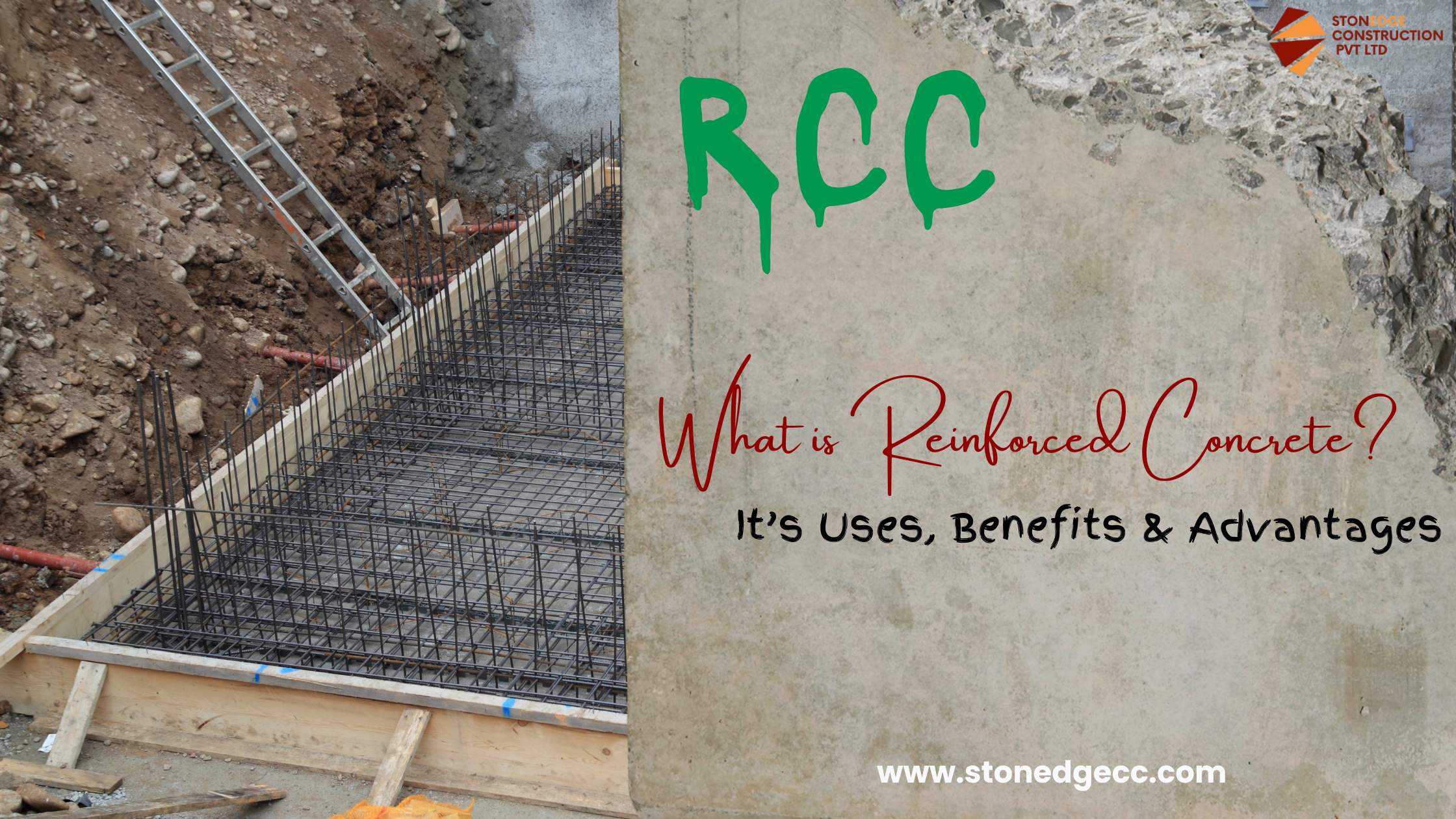
Reinforced Cement Concrete (RCC) is a hybrid of the compressive strength of cement and the tensile strength of steel reinforcement bars (rebar). The combination is done to combine the compressive strength of concrete and the tensile strength of steel. The synergy of RCC enables it to structurally support tensile and compressive loads and thus forms a key element in modern construction. Normal concrete is good in compression but poor in tensile strength. Alternatively, steel is the same strength in both compression and tension; Best structural design when combined with concrete.
The reinforced concrete is very popular building material having characteristics like strong, easy to work with, adaptable, versatile, durable and affordable. It is mainly used in the construction of foundations of rooftops of the building, highway construction, precast structures, floating structures, hydro-power tunnels, irrigation canals, drain, and all other conceivable structures.
Uses of Reinforcement Cement Concrete:
RCC is used in a variety of construction applications, including:
Foundations
Buildings
Roads and Pavement
Pipes and Conduits
Retaining Walls
Floating Structures
Chimneys and Towers
Bridges
Roads
Water Tanks
Flyovers
Bunkers and Silos
Foundations
Marine Structures
Precast Works
Dams and Reservoir
Factors to consider before using RCC :
To ensure the required quality, suitability and cost-effectiveness, certain factors should be noted and considered before purchasing and using reinforced cement concrete for construction projects.
Here are some important factors to consider:
1.Testing and Quality Assurance
Inquire about the testing and quality assurance procedures followed by the supplier or manufacturer. Ask for information about the testing methods used, such as compressive strength tests, slump tests, and reinforcement checks. This helps ensure the reliability and consistency of the reinforced cement concrete
2. Quality Standards
Make sure the reinforced cement concrete fulfils all necessary quality standards and requirements. Hence, you have to verify that the manufacturer or supplier complies with strict quality control standards and holds the necessary certifications. By doing this, you can make sure that the concrete meets the required performance, strength, and durability requirements, guaranteeing a dependable and superior building material.
3. Mix Design
Understand the design of the concrete mix, including the amounts of water, admixtures, cement, sand and aggregates. Check whether the concrete mix design complies with the needs and specifications of your project. Think about the important factors like desired strength, workability, and setting time.
4. Requirement of Strength
Determine your requirement for the strength of the concrete according to the the intended use of the structure and design specifications. Take into account variables like structural stability, environmental conditions, and load-bearing capacity.
5. Source of Materials
Assess the source and quality of the constituent materials used in the reinforced cement concrete, including cement, aggregates, and reinforcement. Ensure that you obtain these materials from reputable sources and that they comply with relevant standards to maintain the overall quality of the concrete.
6.Environmental Considerations
Evaluate the environmental impact of the reinforced cement concrete production process. Inquire about the supplier’s sustainability practices, such as using recycled materials or employing eco-friendly manufacturing techniques.
7.Delivery and Transportation
Consider the logistics of transporting the reinforced cement concrete to the construction site. Evaluate the availability of transportation facilities, delivery timelines, and the supplier’s ability to deliver the required quantity on time. Efficient transportation helps maintain the workability and quality of the concrete.
8.Cost and Budget
Furthermore, assess the cost of the reinforced cement concrete, including the price per unit volume or weight. It is important to compare quotes from different suppliers to determine the most cost-effective option without compromising on quality. By considering the cost factor in conjunction with other important factors, construction professionals can make financially prudent decisions while ensuring the desired quality for their construction projects. Consider any additional costs such as transportation, testing, or special requirements.
Which Grade is Used in RCC?
The particular requirements, environmental conditions, and the expected loads of the structure determine the requirement of a certain grade of concrete to be used in RCC.
Lower-grade concrete is generally used for Driveways, Sidewalks, Patio slabs, Basement floors (non-load bearing), and others.
Medium-grade concrete is generally used for Foundations, Slabs, Walls, Beams (non-structural), Pavements with moderate traffic, and others. High-grade concrete is generally used for big and heavy structures like High-rise buildings, Bridges, Dams, and Tunnels and also for Structures in seismic zones.
Types of Reinforcement
Reinforcement used in concrete is mainly made of steel of different types. It can also be made to the required shape and volume. Some of the types are listed below –
Hot Rolled Bars:
Hot rolled bars are specially prepared reinforcements. Compared to mild steel bars, their tension strength is nearly twice as high and is commonly available in thick sections. They can be bent without developing any defects when heated to up to 100°C, but using regular mild steel bars is not achievable.
Mild Steel Bars :
This bar does not have any ribs; it comes with plain surface and in round shape. Mild Steel Bars are used in RCC for beam, slabs etc. The Tensile Strength is upto 40000 psi. Mild Steel Bars does not bond well with concrete and it is poor in quality that is why it is used in small projects with budget constraint.
Steel Fabric:
This is made from a variety of bars and wires. These may include plain round wires, indented and deformed wires, deformed steel bars of cold-worked type.The mesh from such wires is made by welding together straightened lengths very carefully and strictly in accordance with the specifications
Cold-Worked Bars:
Bars formed with cold worked shapes twisted or ribbed have increased strength. These bars have characteristic strengths of around 425 N/mm² and do not need heating for bending, they are flexible re construction.
Advantages of Reinforcement Cement Concrete:
1. As reinforced concrete can be molded to any shape required, it is widely used in precast structural components. It yields rigid members with minimum apparent deflection
2. Reinforced concrete, as a fluid material, in the beginning, can be economically molded into a nearly limitless range of shapes.
3.RCC structures are fire resistant, surviving heat for about two to six hours and hence safer than steel or wooden buildings.
4. Reinforced concrete is more durable when compared with other materials such as steel.
5. Since the reinforced concrete is made of stone, sand, cement, water, reinforcement, etc. production of the reinforced concrete is not that difficult like other materials.
6.The RCC structures are long-lasting and durable. It can endure for up to 100 years and is not impacted by snow or rainfall. Because RCC has a low permeability, it can withstand substances like carbon dioxide, sulfates, and chlorides that dissolve in water without having significant deterioration.
Disadvantages of Reinforcement Cement Concrete:
1. For multi-storied building the RCC column section for is larger than steel section as the compressive strength is lower in the case of RCC.
2.It takes time for RCC to reach its maximum strength. Thus, it cannot be use right away after construction.
3. The main process of using reinforced concrete are mixing, casting and curing. Which all are affects the final strength.
4.The tensile strength of reinforced concrete is about one-tenth of its compressive strength.
5.The Reinforced concrete structures are heavier than others like steel, wood and glass structures.
6.As concrete losses water it may develop cracks and subsequently losses its strength.
The materials used in RCC (Reinforced Cement Concrete) :
Cement:
Cement is a Binder. It is a powder mixture of various compounds that sets and harden and bind different materials with one another.Portland cement is commonly used in reinforced cement concrete. It reacts with water to form a paste that binds the aggregates and hardens over time.
Aggregates:
These are the inert or chemically inactive materials which form the bulk of cement concrete. These aggregates are bound together by means of cement. The aggregates are classified into two categories – fine and coarse.The material which is passed through BIS test sieve no. 480 is termed as a fine aggregate. Usually, the natural river sand is used as a fine aggregate. But at places, where natural sand is not available economically, the finely crushed stone may be used as a fine aggregate.
Admixture:
Admixtures in Reinforced Concrete (RCC) are materials added to concrete mixes to modify their properties, enhancing performance and durability. They are broadly classified into chemical and mineral admixtures. Commonly used chemical admixtures include water-reducing agents, accelerators, retarders, and air-entraining agents. Mineral admixtures, often byproducts or naturally occurring materials, include fly ash, slag, and silica fume.
Steel :
The steel reinforcement is generally in the form of round bars of mild steel. The diameters of bars vary from 5 mm to 40 mm. Sometimes the square bars or twisted bars or ribbed-torsteel are used as steel reinforcement. For road slabs and such other constructions, the reinforcement may also consist of sheets of rolled steel of suitable thickness. The hyrib which is a steel lath may also be used as steel reinforcement.
Water :
Water is a crucial component in the concrete mixture. It reacts with cement during hydration, causing the mixture to harden and gain strength. The amount of water used should be carefully controlled to achieve the desired consistency and strength while ensuring proper hydration.
Reinforced Concrete is a valuable construction material that assists in making High-rise structures stronger and more reliable. It is a revolutionary construction material innovation that provides versatility, and strength to the structures when used as well as is also cost-effective, which makes it an ideal choice in almost all construction projects. It is a comprehensive and robust product that is crucial in today’s construction. While RCC has a higher long-term initial cost compared to conventional materials required for construction projects, it proves to be cost-effective due to its strength, durability and easy maintenance.
.
.
.
.
.
.
.
.
.
Stonedge Construction Pvt. Ltd. brings trusted expertise in civil works, interiors, electricals, flooring, and more — all across Assam. Whether it’s your dream home or a commercial space, we’re here to make it happen with quality, care, and professionalism.